
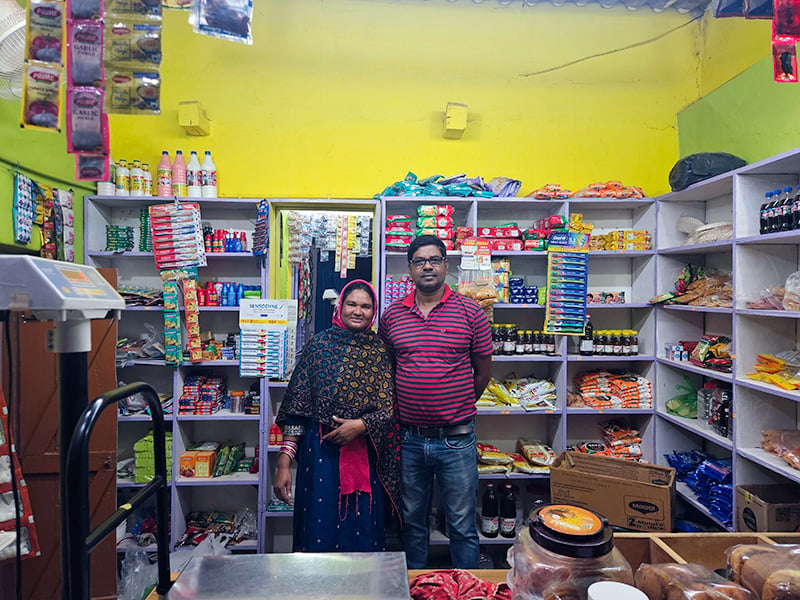
Over the years, questions have been raised about the SALT program’s long-term sustainability. What would happen to SALT Savings Group members if SALT leaves a community or a savings group disbands? Do members continue applying the principles they learned during their time in the savings group meetings, or do they eventually return to their former ways? Kabir’s testimony from South Asia offers a glimpse of the lasting impact these teachings can have.
Kabir* belonged to one of the first SALT Savings Groups in his country. Although the group closed in 2018 because of logistical challenges for SALT staff and declining interest among members, Kabir did not forget what he learned. During his time in the group, he learned valuable lessons about regular saving, financial discipline, planning, and small-business management. Lessons from the SALT Small Business Handbook planted the idea of starting a business, but several challenges kept him from moving forward.
Since then, Kabir has married, and his wife, Aarya, now helps him run a small grocery store attached to their home. By building good relationships with customers, carefully managing expenses, and regularly reinvesting their earnings, they have gradually grown the shop into a trusted store in their community.
Today, Kabir’s grocery store provides daily necessities to local families while helping to support his household financially. His story is an encouraging reminder that the impact of SALT teachings can extend far beyond the years a group actually meets. Not every former SALT member will experience the same outcome. But the knowledge and principles members learn can remain with them, giving them the skills, confidence, and vision to pursue opportunities and build a better future—even years after the group has disbanded.
*Names changed to protect identities.
To help support SALT Microfinance, please click Donate to give a gift.