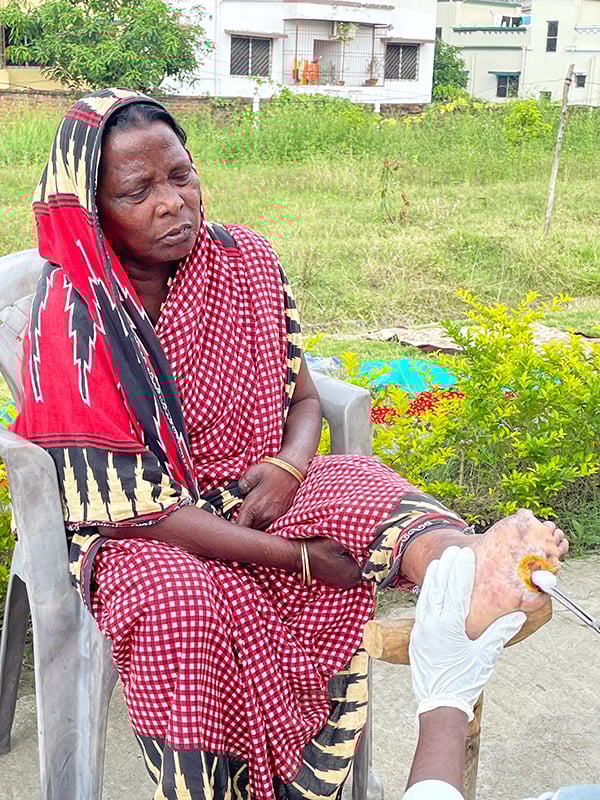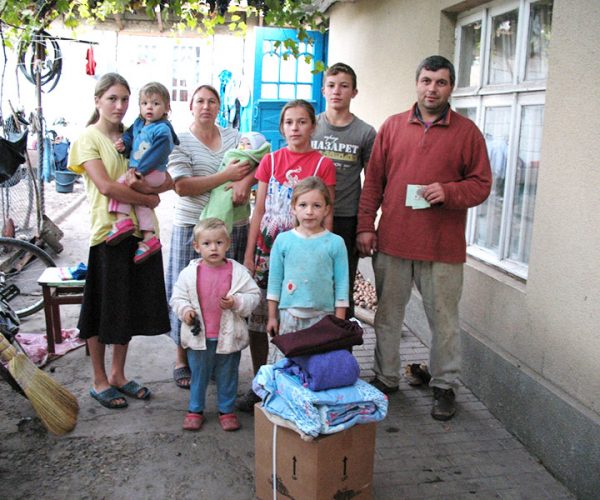
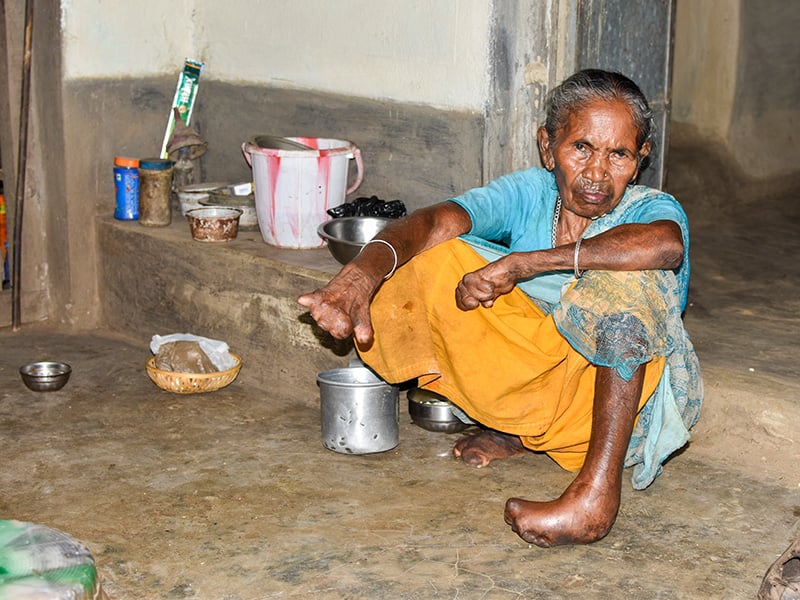
It all begins with white spots on your skin. Surely it can’t be leprosy. In a matter of weeks, you go from a normal, happy life to being one of the most despised, rejected people on earth—a leper. Your landlord evicts you, your boss fires you, and your family sends you far away to live with other lepers. Far enough away that they don’t ever have to associate with you again.
A lifelong curse
In many countries, leprosy has been completely eliminated, but Asia still has thousands of lepers. Similar to the rejection lepers faced in the Bible, lepers in South Asia are avoided by most of society.
And just as in Bible times, these lepers need help. With no one caring for them, their wounds get infected, limbs need to be amputated, and their handicaps grow worse.
Finding a job or starting a business is very difficult for lepers because no one wants to associate with them. Many of them are blind, crippled, or have deformed hands or feet, further limiting opportunities to work. Some resort to begging on the street. With little income, lepers are often hungry and need clothes, housing, and medical attention.
As a 12-year-old, Lazarus discovered a strange discolored spot on his skin one day. He assumed it would disappear with time, but it only got worse. After a while, he lost feeling in his hands and feet. Lazarus was a leper. As people found out, they began keeping their distance from Lazarus. They were worried they’d get leprosy as well, so they rejected him. The isolation left Lazarus feeling alone and helpless. He couldn’t stand living in his own house in his own village, yet so isolated from everyone. He packed his bags and left behind his family, friends, and entire village.
He moved into a colony of lepers, all with stories of rejection similar to his. Because of his deformities, no business was willing to hire him. Like the rest of the leper colony, he survives by begging.
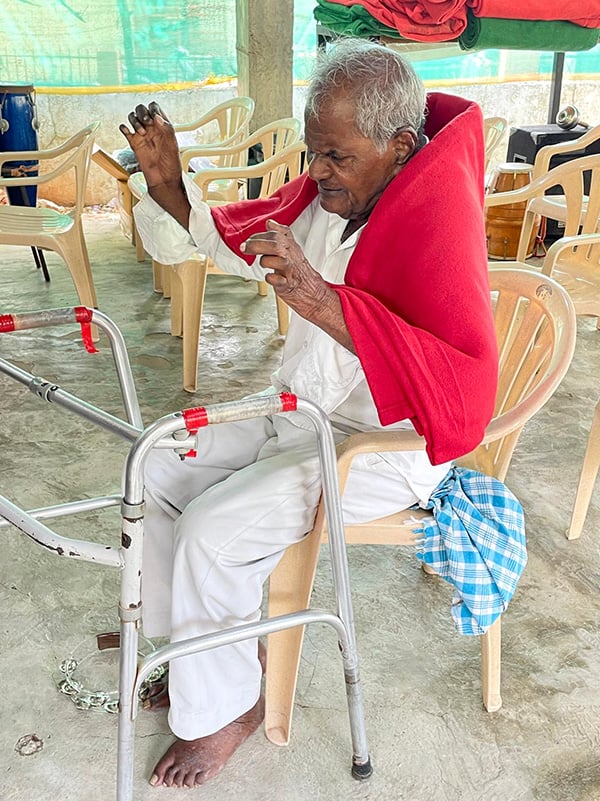
Lazarus, now 80 years old, wears a blanket he was given.
The good news
But there is hope for lepers like Lazarus. Through the help of CAM donors, a local church reached out to Lazarus and others in his leper colony, providing warm blankets, hot meals, and other care. We at CAM are encouraged by the work of these contacts and others in South Asia who care for lepers like Lazarus. They bandage and disinfect wounds and provide wheelchairs, medical equipment, blankets, food, housing, and custom-fitted sandals for deformed feet.
But more importantly, they show lepers that God values them and cares about their needs. For people who have experienced rejection all their lives, the love and friendship of Christian workers often mark a major turning point. Large numbers of lepers have chosen the way of truth.
When Jesus sent out His twelve disciples in Mark 10, He told them to “cleanse the lepers.” Our contacts put these words into action, helping to bring cures to many lepers through quality medical attention. Entire leper colonies where our contacts work are now considered leprosy-free. Sadly, the handicaps and shame associated with leprosy continue even for those who are cured.
If you choose to help provide for lepers in South Asia, your donation will provide compassionate care for some of the most rejected people on earth.